I wanted to quantify the actual cost of currency hedging (USD/ILS) for index-tracking ETFs and mutual funds on the Tel Aviv Stock Exchange (TASE). Many Israeli investors face the choice between hedged (“מנוטרלת מט"ח”) and unhedged versions of the same fund, and the hedging cost is rarely stated explicitly by the fund providers.
Methodology
For each hedged/unhedged pair, I fetched historical closing prices from the TASE API and USD/ILS exchange rates from Yahoo Finance. The hedging cost is derived by comparing the hedged fund’s return to the unhedged fund’s return after stripping out the FX component:
- Compute daily returns for the hedged fund, the unhedged fund, and USD/ILS.
- The unhedged fund is priced in ILS but tracks a USD-denominated index, so its return already embeds FX moves. Dividing the cumulative unhedged return by the cumulative FX return gives us the “FX-stripped” return: what the unhedged fund earned in pure index terms.
- The difference between the hedged fund’s cumulative return and this FX-stripped return is the realized hedging cost.
A negative value means the hedged fund underperforms, i.e., hedging costs money.
I analyzed 11 fund pairs (8 ETFs and 3 mutual funds) covering S&P 500, Nasdaq 100, MSCI ACWI, and MSCI World indices, with data going back up to 5 years (the TASE API limit).
Results
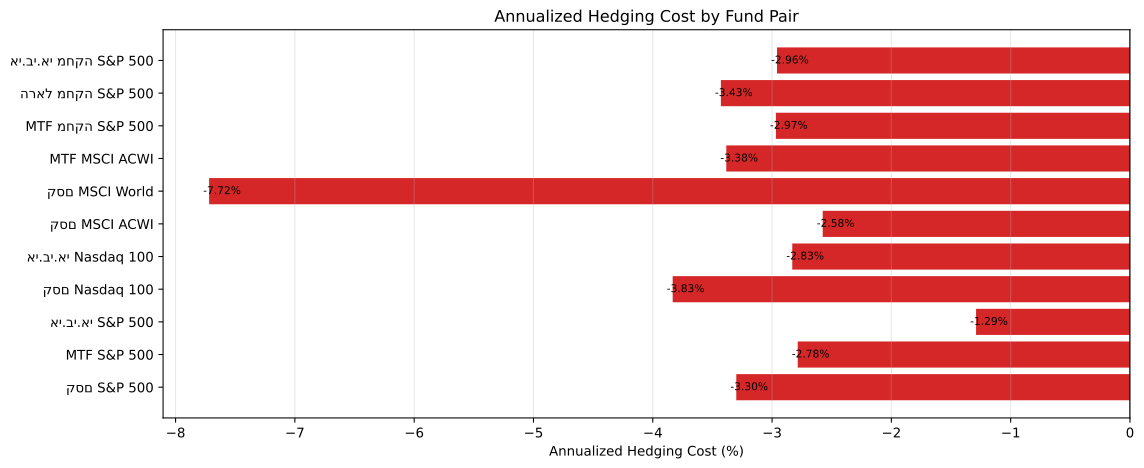
The annualized hedging cost per fund pair, broken down by calendar year:
| Instrument | 2021 | 2022 | 2023 | 2024 | 2025 | 2026 | Overall |
|---|---|---|---|---|---|---|---|
| קסם S&P 500 | -1.24% | -5.40% | -3.77% | -3.10% | -2.63% | -2.56% | -3.30% |
| MTF S&P 500 | -0.39% | -4.69% | -3.50% | -2.36% | -2.79% | -1.22% | -2.78% |
| אי.בי.אי S&P 500 | — | — | — | -0.56% | -1.13% | -3.94% | -1.29% |
| קסם Nasdaq 100 | -2.31% | -6.41% | -3.92% | -2.84% | -3.88% | -1.65% | -3.83% |
| אי.בי.אי Nasdaq 100 | — | — | — | -2.15% | -3.45% | -2.42% | -2.83% |
| קסם MSCI ACWI | +0.89% | -7.17% | -2.64% | -2.18% | -1.67% | -2.78% | -2.58% |
| קסם MSCI World | -10.85% | -21.83% | -8.54% | -4.33% | -3.98% | -3.45% | -7.72% |
| MTF MSCI ACWI | — | — | — | -2.60% | -3.74% | -1.42% | -3.38% |
| MTF מחקה S&P 500 | -0.04% | -4.90% | -3.98% | -2.17% | -3.23% | -1.86% | -2.97% |
| הראל מחקה S&P 500 | -0.36% | -5.60% | -4.47% | -2.65% | -3.63% | -1.83% | -3.43% |
| אי.בי.אי מחקה S&P 500 | -0.16% | -4.76% | -4.10% | -2.11% | -3.16% | -1.93% | -2.96% |
| Average | -1.81% | -7.59% | -4.36% | -2.46% | -3.03% | -2.28% | -3.37% |
| Median | -0.37% | -5.50% | -3.95% | -2.36% | -3.23% | -1.93% | -2.97% |
The 2026 column covers only the first ~3 months (through March 2026) but is annualized for comparability.
The קסם MSCI World pair is a clear outlier with dramatically higher costs, suggesting issues beyond pure hedging (likely significant tracking error or structural differences between the hedged and unhedged versions of that specific product).
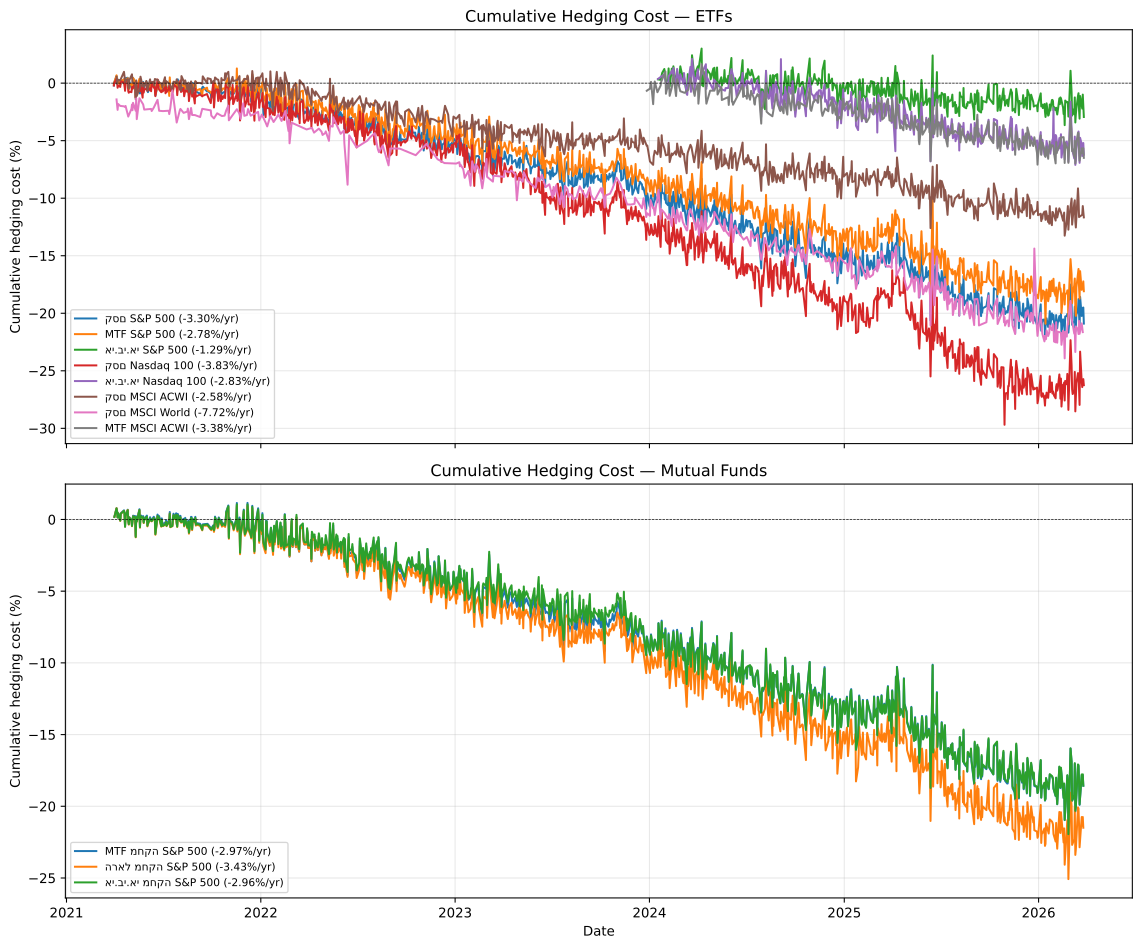
The cumulative hedging cost over time shows a consistent downward drift across all instruments:
Takeaways
- The median annualized hedging cost across all instruments and years was about -3%.
- Hedging costs are not constant; they ranged from roughly -1% to -8% depending on the year and the interest rate environment.
- When choosing between hedged and unhedged TASE index funds, the hedging cost is a significant drag that should be weighed against your view on future ILS/USD exchange rate movements.